
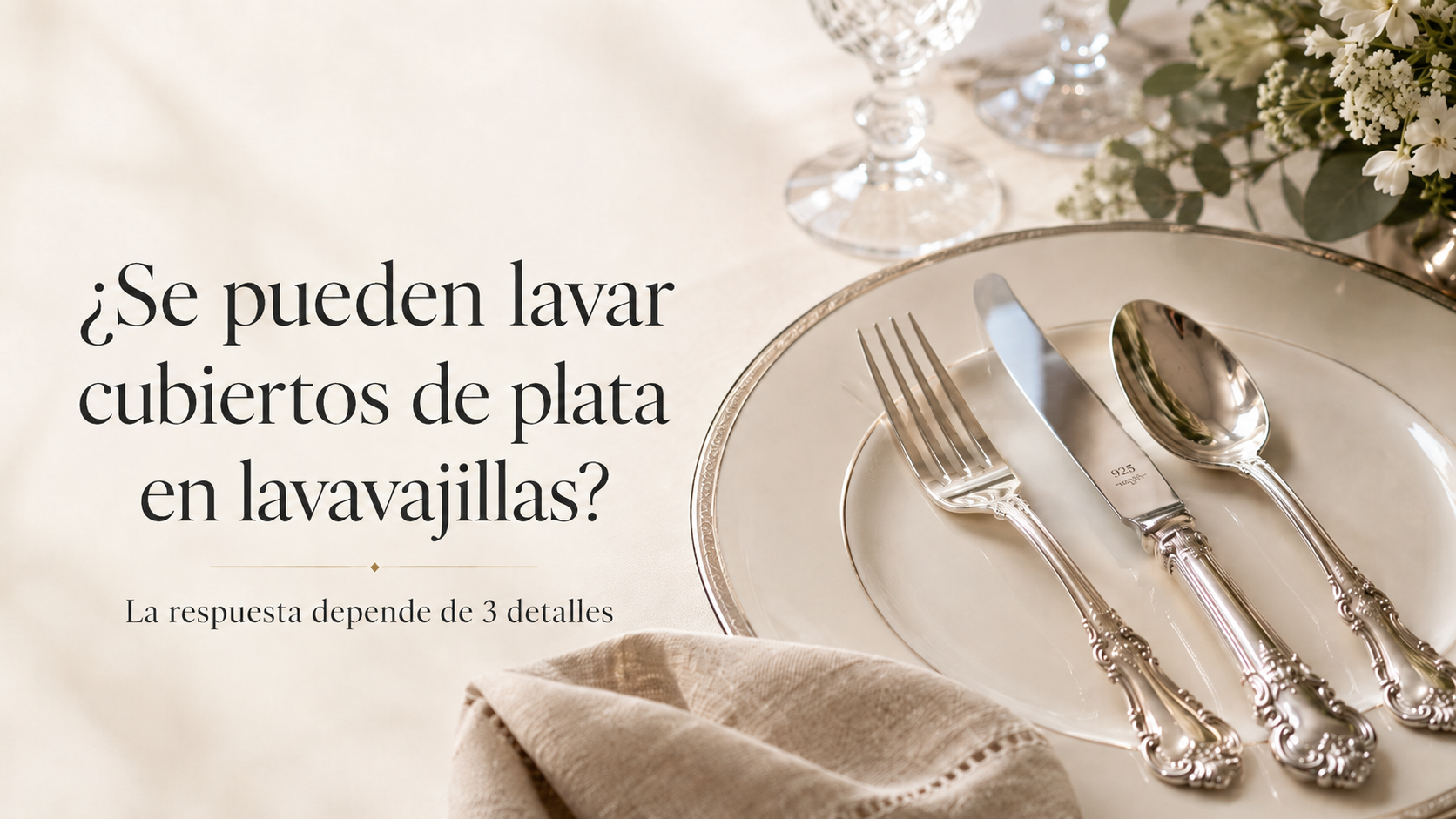
Putting silver flatware in the dishwasher can be a perfectly acceptable routine or a costly mistake. The difference is not a simplistic rule about “silver,” but three details: what each piece is made of and how it is constructed, what its manufacturer expressly authorizes, and the conditions under which the cycle is run. Before pressing Start, answer those three questions.
Quick answer: yes, some modern sterling-silver and silver-plated flatware can be washed in a dishwasher when the manufacturer permits it. Antique pieces, pieces of unknown construction, items with wood, mother-of-pearl, bone, or other sensitive handle materials, and collections excluded by the brand itself should not go in the machine. When in doubt, hand washing is the prudent choice.
The Answer at a Glance
| Type of piece | Dishwasher? | Prudent decision |
|---|---|---|
| Modern sterling silver or silver-plated flatware, made entirely of compatible materials and expressly approved by the manufacturer | Yes, with conditions | Follow the collection-specific instructions, separate metals as directed, and dry promptly after the cycle. |
| Modern piece, but no care instructions are available | Cannot be confirmed | Hand wash until you can confirm the brand's recommendation. |
| Antique, inherited, or unknown-construction flatware | Not recommended | Inspect hallmarks, joints, blades, and handles before fully wetting the piece. |
| Wood, mother-of-pearl, bone, ivory, horn, delicate resin, or added decoration on the handle | No | Wash gently by hand, avoid prolonged soaking, and dry immediately. |
| Precious flatware with stones, inlays, or special finishes | Generally no | Follow the care sheet and consult the manufacturer or a specialist. |
Detail 1: Material and Construction
The term silver flatware covers pieces that can look similar while reacting very differently to water, detergent, and heat. A solid sterling-silver spoon is not the same as a base-metal piece coated with silver. Nor does it behave like a knife with a silver or silver-plated handle joined to a steel blade.
Before cleaning a valuable piece, the Canadian Conservation Institute recommends examining hallmarks, soldered joints, hollow sections, and nonmetallic materials. This inspection helps distinguish solid silver, silver plate, and composite objects for which full immersion may be unsuitable.
Sterling Silver
Sterling silver is commonly identified by marks such as 925, although hallmarking systems and historical standards vary by country and period. The number alone does not tell you whether a piece can go in the dishwasher: construction, knife design, age, and the collection's care instructions still matter. In Mesa Real's flatware selection, material specifications should always be read from the manufacturer's product information rather than inferred from color or shine alone.
Silver-Plated Metal
Silver-plated metal has a surface layer of silver over another metal. With appropriate care, that layer can last for many years, but it is not unlimited. Aggressive washing, abrasives, and unnecessarily frequent polishing can affect the finish. The goal is not to “make it shine at all costs,” but to remove residue using the least invasive method compatible with the piece.
Knives and Composite Pieces
Knives deserve special attention. They may combine a steel blade, a silver or silver-plated handle, internal filling, and different types of joints. Christofle, for example, states that its antique knives made before 1968 should not be washed in the dishwasher. That date belongs to that manufacturer's guidance and should not be turned into a universal rule for every brand.
Sensitive materials are the clearest signal to choose hand washing. Robbe & Berking excludes flatware with horn, mother-of-pearl, or wood components from the dishwasher; Puiforcat likewise specifies hand washing for wooden flatware and advises against machine washing for its precious flatware. A metallic appearance does not mean the entire construction is metal.
Detail 2: Manufacturer and Collection
The decisive authority is not a generic recommendation online, but the current care instruction from the manufacturer for the specific collection. Two prestigious houses can give different advice because they do not use identical constructions, finishes, or material combinations.
- Christofle states that the flatware sold on its website is dishwasher safe except for the Talisman collection; for L’Âme de Christofle, it recommends only occasional dishwasher use.
- Robbe & Berking states that its silver and silver-plated flatware can be washed in the dishwasher when its loading, detergent, and drying guidance is followed.
- Puiforcat provides dishwasher instructions for its silver and silver-plated flatware, but advises against machine washing precious flatware and specifies hand washing for wood.
These differences show why extrapolation is risky. Before the first wash, look for the care sheet, service manual, or written guidance from the brand. You can begin by identifying the manufacturer on Mesa Real's brands page; when documentation is insufficient, our team can help you formulate the right question.
The right question is not “Can silver go in the dishwasher?” but “Can this piece, from this collection, with this construction, go in the dishwasher?” — Mesa Real editorial principle
Detail 3: Cycle, Loading, and Drying
Manufacturer approval does not mean that every program, detergent, or loading arrangement is suitable. Official care guides converge on several principles: avoid harsh or abrasive formulas, keep silver and stainless-steel flatware separate when the brand instructs you to do so, position knives correctly, and remove moisture promptly after the cycle.
Before the Cycle
- Remove residue from egg, lemon, mustard, fish, and other foods as soon as possible; Christofle's guidance associates these foods with discoloration.
- Do not allow acidic or protein-rich food residue to dry on blades or surfaces.
- Make sure the dishwasher salt reservoir is properly closed and that no loose salt crystals are present.
- If you have just refilled the dishwasher salt, follow your manufacturer's specific recommendation before putting silver into that first cycle.
During the Cycle
Use the detergent type and quantity specified by the manufacturer. Christofle recommends chlorine-free, citric-acid-free powder and advises against gels, liquids, lemon-scented products, and multifunction tablets for its flatware. Puiforcat also recommends powdered detergent. Robbe & Berking warns that excessive dosing and certain concentrated tablets can contribute to spotting on its pieces.
Do not turn those instructions into a universal recipe: detergent formulations vary by country and product. Read the label, the dishwasher manual, and the flatware care sheet. When the brand requires separation, wash silver and stainless steel separately or keep them sufficiently separated in the baskets. Position knives according to the manufacturer's instructions; both Robbe & Berking and Puiforcat advise placing the blade downward.
After the Cycle
When the cycle ends, open the door to release steam if the appliance manual permits it. Remove the flatware promptly and dry any remaining moisture with a soft cloth. Christofle, Robbe & Berking, and Puiforcat all include prompt drying among their recommendations to help prevent water marks, residue, or loss of surface luster.
A Safer Seven-Step Routine
- Identify the piece. Check hallmarks, brand, collection, age, joints, and handle materials.
- Find the exact approval. Do not assume that dishwasher approval for another collection from the same house applies to yours.
- Rinse problematic residue. Act especially quickly after acidic or protein-rich foods.
- Prepare an orderly load. Avoid unnecessary contact, do not crowd pieces, and follow any prescribed separation of metals.
- Use the recommended detergent. Type, formula, and dose should match both the collection guidance and your local water conditions.
- Do not leave the load sitting after the cycle. Release steam and remove the flatware when the program ends.
- Dry and inspect. Use a soft cloth and check blades, joints, spots, and trapped moisture.
When You Should Always Hand Wash
Hand washing is the right decision when information is missing or when the piece presents a material risk that a machine cycle cannot control. Choose hand washing in the following cases:
- antique, inherited, or unmarked flatware;
- pieces with hollow handles, fillings, or joints that are loose, cracked, or repaired;
- wood, horn, mother-of-pearl, bone, ivory, stones, enamel, lacquer, or inlays;
- vermeil, gilding, niello, intentional patinas, or special finishes without express dishwasher approval;
- heavily worn silver plate, visible copper, or areas where the base metal is exposed;
- flatware with historical, sentimental, or collectible value that could not be readily replaced.
Use lukewarm water, a soft sponge, and a product compatible with the manufacturer's guidance. Avoid abrasive pads, hard brushes, and general-purpose metal cleaners. Do not prolong immersion for composite pieces. Rinse and dry immediately, paying particular attention to handle joints.
The Dishwasher Does Not Replace Conservation Care
A dishwasher cycle removes food residue and everyday soil, but it should not be confused with tarnish treatment. Silver darkening is mainly associated with the formation of silver sulfide from sulfur compounds. The Canadian Conservation Institute notes that each polishing or chemical removal of the dark layer can remove a small amount of underlying silver; for that reason, it recommends prioritizing prevention and cleaning only when necessary.
If spots appear after dishwashing, do not respond with progressively harsher cycles. Rinse, dry, and consult the manufacturer's procedure. A water mark, detergent residue, surface alteration, and worn silver plate do not require the same remedy. For valuable pieces, avoid experimenting with homemade mixtures, acidic baths, or abrasive methods before identifying the material.
Six Mistakes That Shorten the Life of the Finish
- Treating every silver-plated piece as identical. Plating thickness, base metal, and condition matter.
- Assuming that “925” automatically means “dishwasher safe.” The hallmark describes silver fineness, not the entire construction.
- Mixing materials without checking the care guide. Several manufacturers instruct users to separate silver and stainless steel.
- Leaving food residue until the next day. Prolonged contact can make gentle cleaning more difficult.
- Using more detergent to get more shine. Excessive dosing can leave residue or contribute to spotting, according to brand guidance.
- Leaving flatware wet inside the machine. Prompt drying is part of the care guidance from the manufacturers reviewed.
How to Decide in One Minute
| Question | If yes | If no |
|---|---|---|
| Do you know the brand and collection? | Find the official care guide. | Continue with hand washing. |
| Does the guide expressly authorize dishwasher use? | Review the stated conditions. | Do not use the machine. |
| Is the entire piece compatible and in good condition? | Prepare a separated, orderly load. | Avoid immersion and seek an assessment. |
| Do you have the detergent and routine specified? | Run the cycle and dry promptly afterward. | Postpone machine washing. |
Choose Flatware With Clear Care Instructions
Ease of maintenance should be part of the buying decision, not something discovered afterward. Before choosing a collection, ask about the exact material, knife construction, exceptions within the series, recommended detergent, replacement-piece availability, and whether an official restoration service exists.
You can explore our flatware category, browse the 925 silver filter, or review the manufacturers available. When a specific reference does not provide enough care information, do not guess: send an inquiry with photos of the hallmarks, the collection name, and the condition of the handles.
To understand why documentation, hallmarks, and nonaggressive care also influence the traceability of a piece, read our guide to flatware, crystal, and porcelain as long-term heritage objects. To bring the pieces into a complete table setting, continue with The Art of Entertaining.
Frequently Asked Questions
Can 925 sterling silver go in the dishwasher?
Not simply because it carries a 925 hallmark. It may be dishwasher safe when the manufacturer authorizes it and the entire construction is compatible. If the piece is antique, composite, or lacks instructions, hand wash it.
Can silver-plated flatware go in the dishwasher?
Some modern collections can. The silver layer, base metal, condition of the plating, and brand recommendations determine the method. Do not machine-wash a worn piece or a piece of unknown origin without reliable confirmation.
Why is silver often kept separate from stainless steel?
Christofle and Puiforcat instruct users to separate the two materials in their care guidance. The practical approach is to follow that instruction with separate wash loads or sufficiently separated baskets, without turning it into a universal explanation for every alloy and dishwasher.
Which detergent should I use?
It depends on the manufacturer. Christofle and Puiforcat recommend powdered detergent for the pieces covered by their guidance; Christofle also excludes chlorine, citric acid, gels, liquids, lemon-scented products, and multifunction tablets. Always check the formulation sold in your country.
What should I do if spots appear after washing?
Remove moisture, rinse away any residue, and dry with a soft cloth. Do not immediately apply an abrasive or chemical bath. First identify whether the issue is water, detergent, tarnish, or plating loss, and then follow the care product or method approved by the brand.
Will the dishwasher remove black tarnish from silver?
That is not its purpose. A dishwasher removes everyday residue, while tarnish requires conservation care appropriate to the material. Excessive polishing also removes a small amount of silver, so it should not be an automatic response to every color change.
What should I do with inherited flatware?
Do not put it in the machine until you have identified hallmarks, brand, construction, and repairs. Photograph every mark, group the pieces by type, and consult the manufacturer, a silversmith, or a conservator when the service has historical or sentimental value.
The Rule That Best Protects Your Flatware
Use the dishwasher only when three conditions align: you know the material and construction, the manufacturer authorizes the collection, and you can reproduce the recommended loading, detergent, and drying routine. If even one condition is missing, hand washing can prevent an hour of convenience from turning into difficult-to-reverse damage.
Want to confirm the care instructions for a collection? Explore our flatware selection or send us the brand, reference, and photos of the hallmarks. Mesa Real can help locate the applicable guidance before recommending a method.
Editorial and source review: August 3, 2026. This guide provides general information. The current instructions issued by the manufacturer of each collection take precedence over any generic recommendation.
Sources Consulted
- Christofle — Care Guidance: silverware and dishwasher.
- Robbe & Berking — How to clean silver cutlery in the dishwasher.
- Puiforcat — Care instructions for cutlery.
- Canadian Conservation Institute — Silver: care and tarnish removal.
Mesa Real · Curated European flatware, glassware, and porcelain for Latin America.