A tiny figure can completely change how a piece is interpreted. On many European silver-plated flatware pieces, the numbers 20, 40, 90, or 100 describe a classification of the silver coating; they do not express the purity of the metal or the weight of silver contained in each individual spoon, fork, or knife.
The 20, 40, 90, or 100 hallmarks found on numerous silver-plated flatware pieces of continental tradition—especially Central European—usually belong to a historical silver-plating classification system. In its classic form, the number was linked to the grams of fine silver allocated to a reference batch of 24 main pieces; in later technical formulations, it is also expressed through a reference surface area. It does not mean 90 % silver, 90 grams in a single piece, or solid silver. The definitive interpretation depends on the manufacturer, the country, the era, and the type of flatware.
The figure describes the plating, not the hallmark of the piece
Silver-plated flatware combines a base metal with an outer layer of silver. The stamped number can help classify the nominal amount used for that coating within a specific system. On its own, however, it does not identify with certainty the base metal, the manufacturer, the date, the quality of the finish, or the amount of silver that remains today after decades of use and polishing.
This distinction avoids the most common error: reading a “90” hallmark as if it were an alloy with 90 % silver. In the tradition described here, 90 is a silver-plating reference; a hallmark like 925, by contrast, expresses parts of fine silver for every thousand parts of the marked alloy.
ESSENTIAL DISTINCTION
20 / 40 / 90 / 100 Nominal classification of the coating in certain historical or technical systems. 800 / 835 / 925 Hallmark or fineness of a silver alloy, expressed in parts per thousand.
Where the gram scale comes from
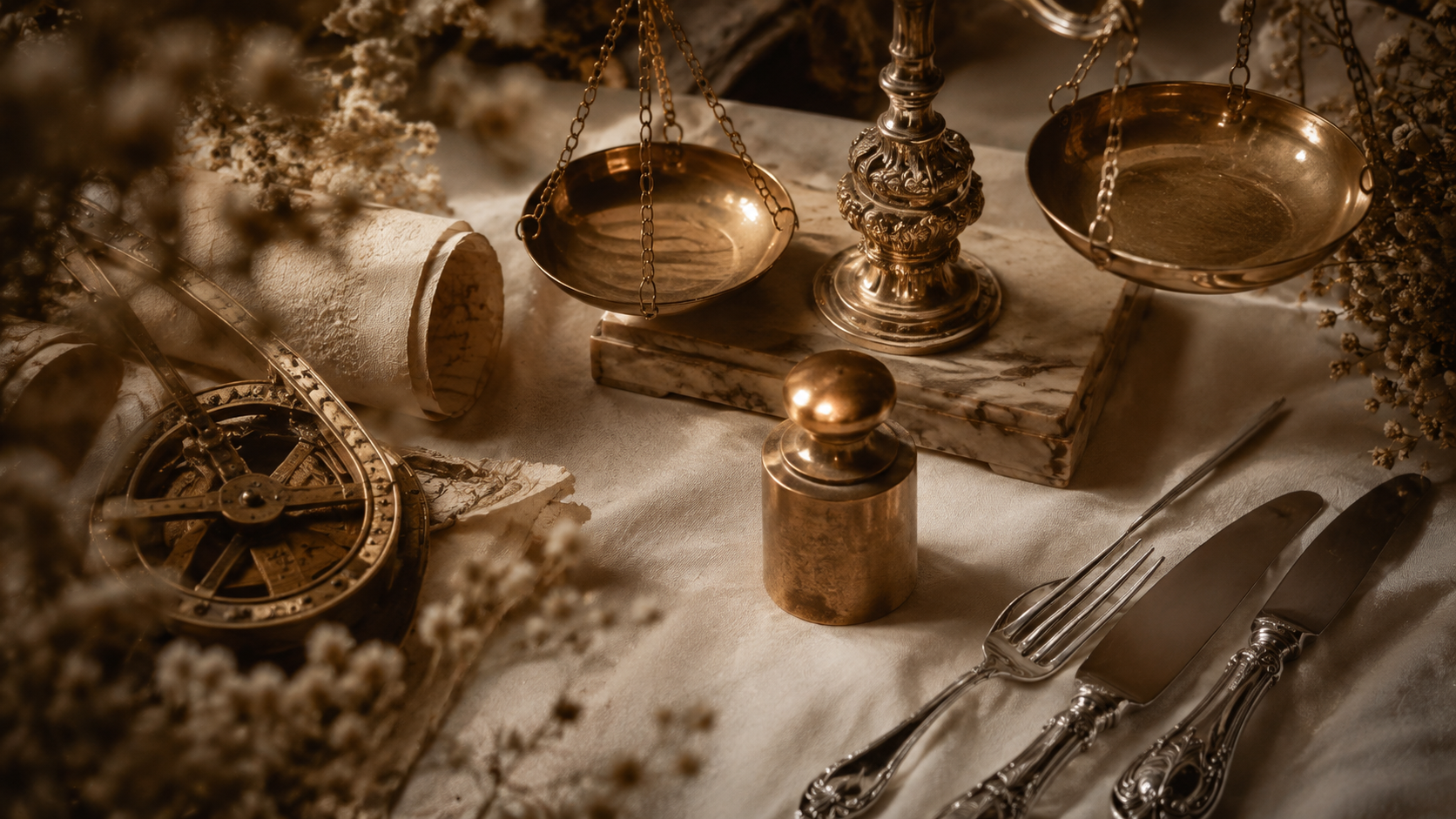
The most widespread historical explanation dates back to the industrialization of electrolytic silver plating in Germany during the 19th century. The reference batch consisted of twelve table spoons and twelve table forks. A 90 hallmark indicated that 90 grams of fine silver were used for the plating of that set of 24 pieces. Since spoons and forks do not have the same surface area, the silver was not distributed identically among all units.
The 925-1000 Encyclopedia of Silver Marks documents this “12 + 12” system and also warns that manufacturers developed equivalencies for other pieces and, over time, used their own variants. Therefore, the number should be read as part of an industrial and historical language, not as a universal formula applicable to any flatware in the world.
The technical surface reference
In the context of the German RAL guidelines for 90-gram silver plating, the technical reference is formulated differently: 90 grams of silver deposited over 24 square decimeters of surface area. This is equivalent to 3.75 grams per square decimeter and a calculated average thickness of approximately 36 micrometers. The technical explanation can be consulted at the Leuze Academy of Electroplating.
This figure of 36 micrometers corresponds to the calculation of that specific RAL reference. It should not be automatically applied to any antique piece marked 90, because the manufacturer, geometry, process, wear, and marking system may be different.
The hallmark is a technical clue. It only becomes a reliable identification when interpreted alongside the manufacturer, the era, the type of piece, and its current condition. Mesa Real · House Editorial
What 20, 40, 90, and 100 usually mean
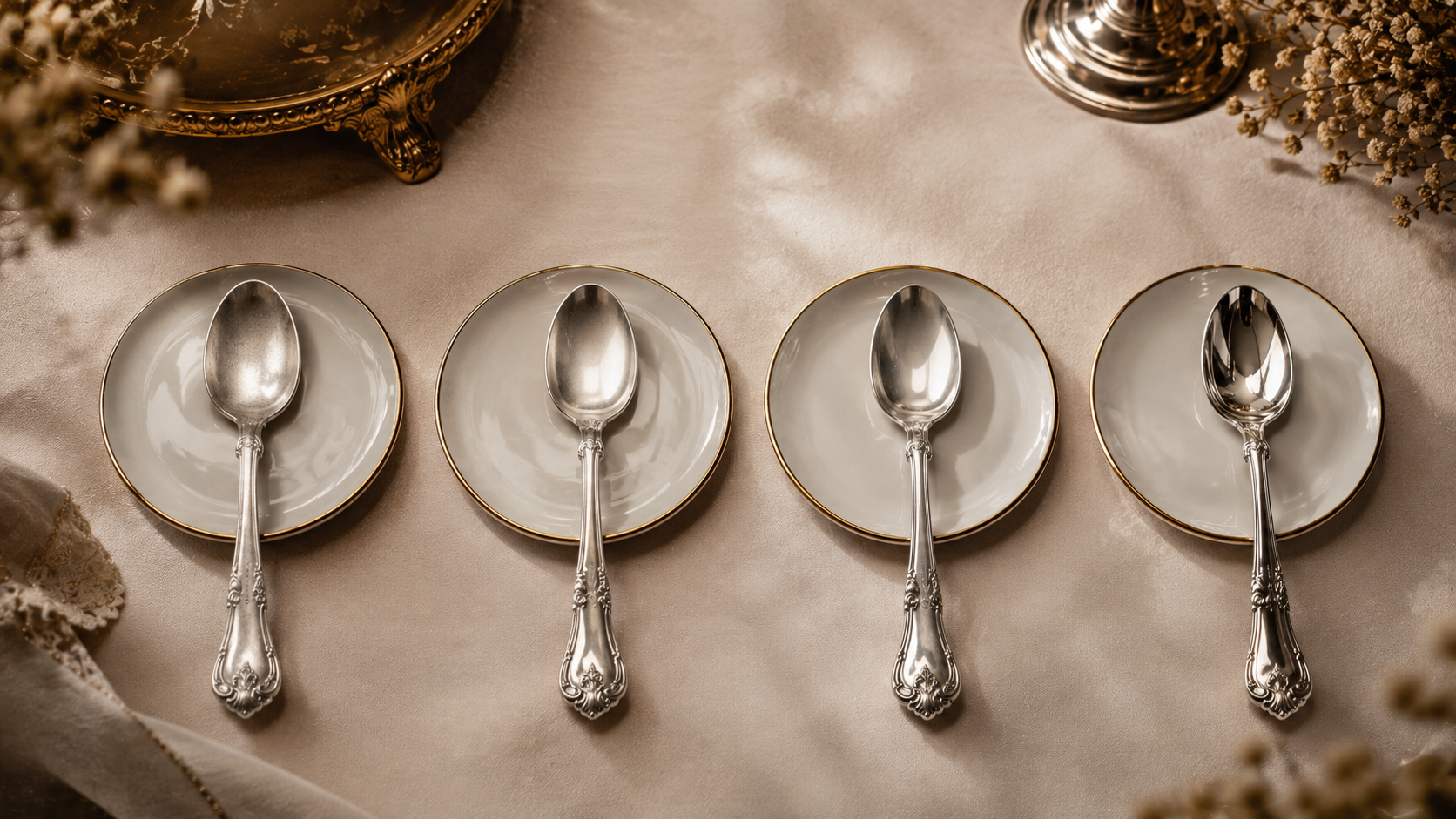
Within the same comparable scale, a higher number usually indicates a greater nominal amount of silver applied. This hierarchy serves to guide the reading, but it does not allow each mark to be converted into an exact thickness without additional documentation.
| Hallmark | Prudent reading | What it does not prove |
|---|---|---|
| 20 | Lightest nominal grade within the historical scales that used this figure. | It does not mean 20% silver or 20 grams in each flatware piece. |
| 40 | Nominal deposit higher than 20 and lower than 90 when the pieces belong to the same system. | It does not allow one to deduce age, brand, or remaining thickness on its own. |
| 90 | Very widespread reference in German and Central European silver-plated flatware; historically linked to a set of 24 main pieces. | It is not a 900 hallmark, it is not 90%, and it does not certify solid silver. |
| 100 | Nominal grade slightly higher than 90 within a comparable scale from the same manufacturer or tradition. | It does not automatically guarantee higher value, better execution, or better preservation. |
Why you should not divide the number by 24
The operation 90 ÷ 24 produces 3.75 grams, but that result is only an arithmetic average of the historical set. A spoon offers more surface area than a fork, while a knife has a different construction. Furthermore, the hallmark describes the original nominal application; it does not measure how much coating remains after use, cleaning, repairs, or previous repolishing.
Consequently, it is not correct to state that each piece marked 90 “contains 3.75 grams of silver.” To know the thickness or the remaining mass, a technical analysis of the specific piece would be required.
90 is not 925: two different languages
The numbers look similar, but they answer different questions. The marks 20, 40, 90, or 100 help interpret a coating. The figures 800 or 925 indicate the fineness of a silver alloy. Irish hallmarking regulations, for example, define 800 as 800 parts of fine silver per 1,000 parts by weight and 925 as 925 parts per 1,000.
| Brand or term | What it describes | Correct reading |
|---|---|---|
| 20 / 40 / 90 / 100 | Quantity or nominal grade of silver plating in specific systems. | Base metal coated in silver; context is mandatory. |
| 800 | Fineness of the marked alloy. | 800 parts of fine silver per 1,000 parts by weight. |
| 925 / Sterling | Fineness of the marked alloy. | 925 parts of fine silver per 1,000 parts by weight. |
When you are looking for a solid silver piece, the proper path is not to interpret a 90 as if it were 925. It is advisable to review the material specifications, the complete hallmarks, and the documentation. At Mesa Real, you can consult the filtered selection of sterling silver and compare it with the general flatware category, where each reference must indicate its actual material.
Does a higher number always mean better quality?
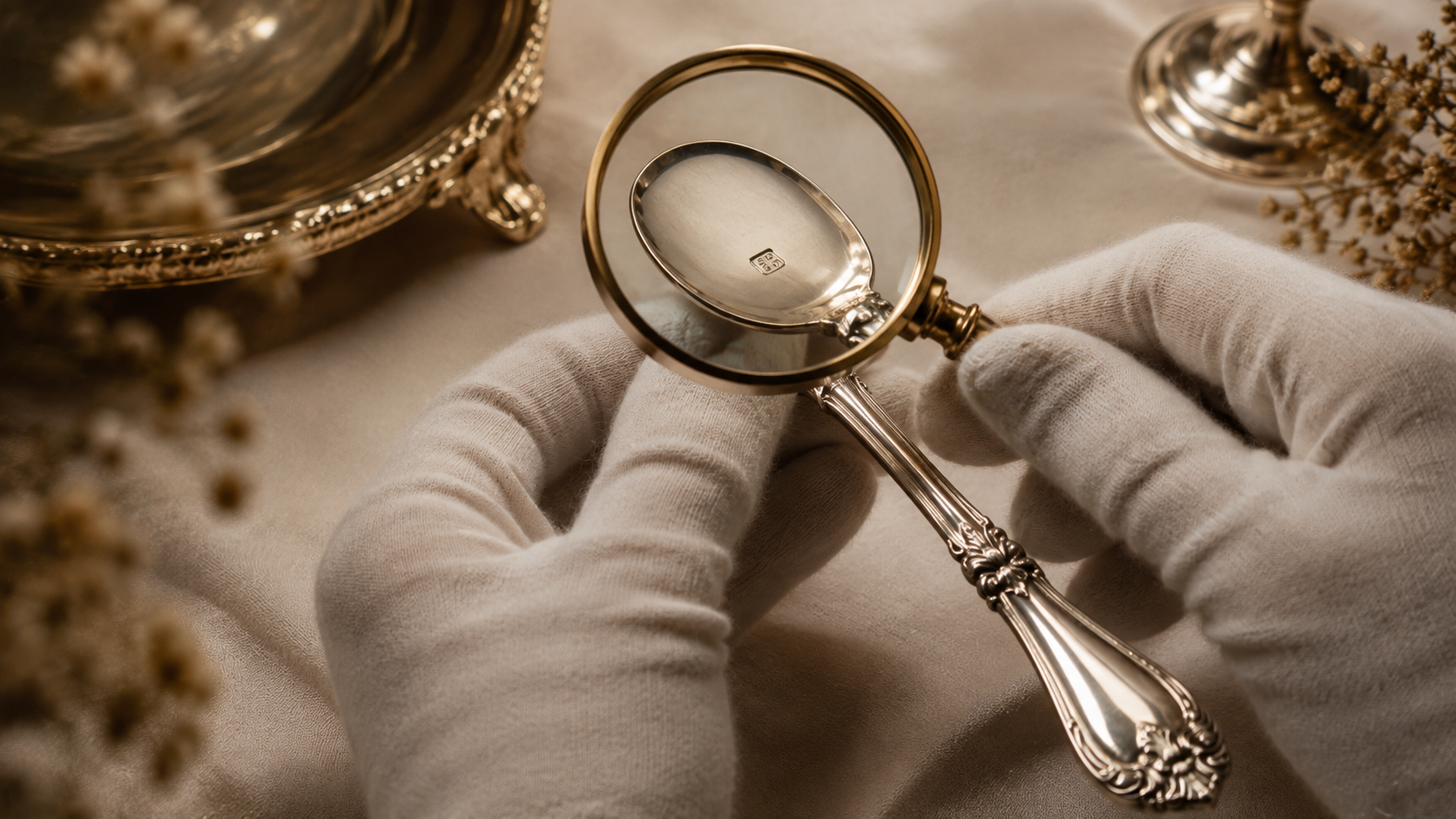
Only within comparable conditions. If two pieces come from the same manufacturer, the same era, the same pattern, the same type of flatware, and the same marking system, a higher figure usually indicates a more abundant nominal application. Outside of that framework, the comparison can be misleading.
The quality of a silver-plated piece also depends on the preparation of the base metal, the adhesion of the coating, uniformity, finish, construction, wear, and restorations. A heavily worn 100 hallmark does not necessarily offer a better experience than a well-preserved 90 hallmark.
For contemporary flatware, the ISO 8442-2:1997 standard, reconfirmed in 2025, establishes material and performance requirements for stainless steel and silver-plated cutlery, in addition to three minimum silver thicknesses. This modern reference evaluates technical characteristics of the piece; it does not turn old 20, 40, 90, or 100 marks into a universal guarantee of quality.
FIVE SECURE CONCLUSIONS
- 90 does not mean 90% silver.
- The number is not the silver weight of an individual piece.
- 100 does not turn silver-plated flatware into solid silver.
- A higher number can only be rigorously compared within the same system.
- The hallmark does not replace the examination of the manufacturer, condition, and documentation.
How to examine a hallmark without damaging the piece
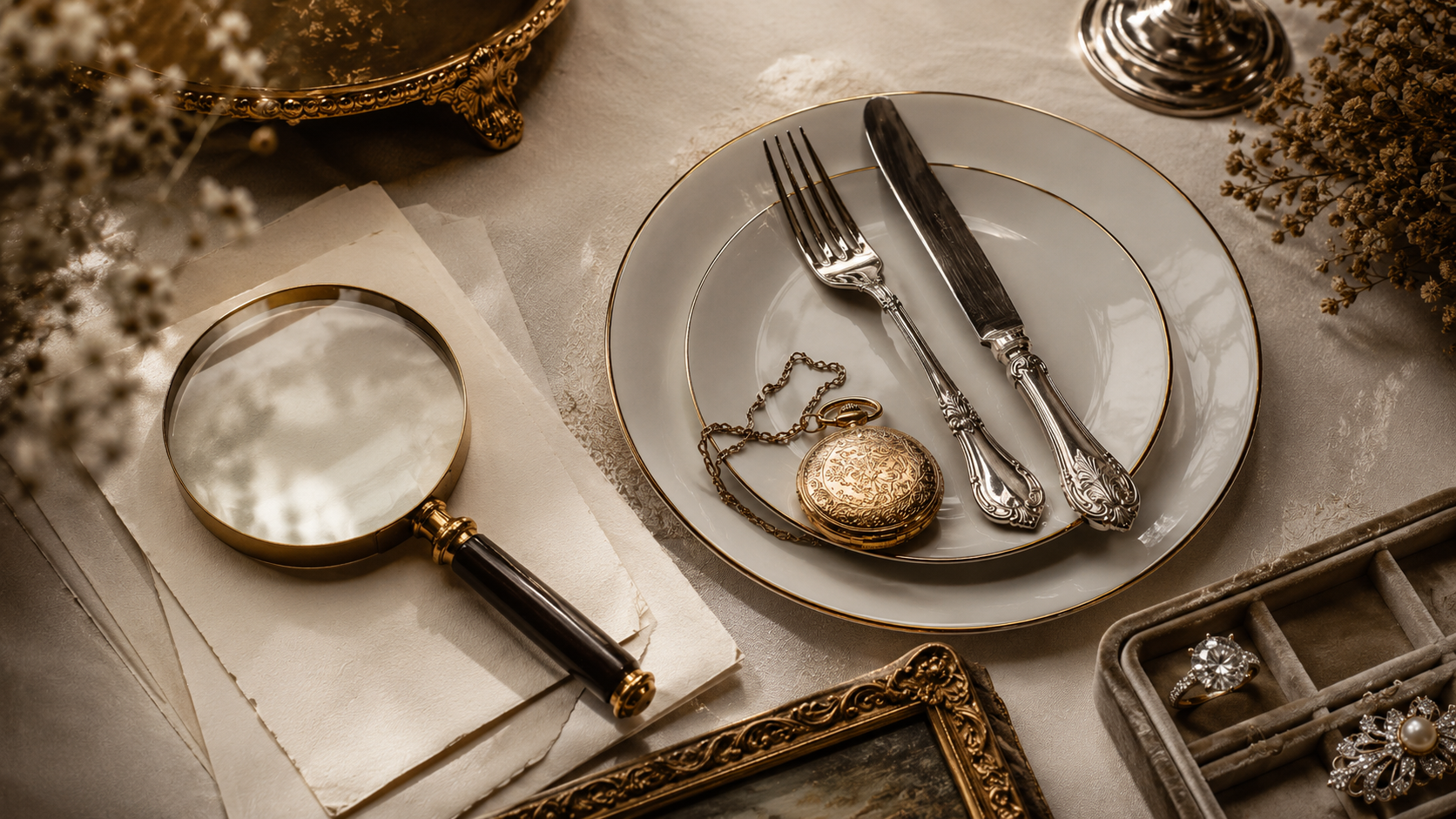
Proper identification begins before cleaning. Aggressive polishing can soften edges, erase hallmark details, and remove useful information. Work with side lighting, a magnifying glass, and sharp photographs; if the piece has historical or economic interest, avoid domestic chemical tests and consult a specialist.
- Photograph the complete set. Include the front, back, handle, joint, and any secondary marks.
- Transcribe all signs. Number, name, initials, logo, country, words like EPNS, Alpacca, Neusilber, stainless, or Sterling.
- Identify the type of piece. Spoon, fork, knife, and serving piece may follow different equivalencies.
- Compare pieces from the same service. Check if all bear the same mark and if any were replaced.
- Search for the manufacturer and pattern. Consult hallmark archives, catalogs, and original documentation before attributing a date or origin.
- Examine the wear. Different tones on edges, contact areas, or reliefs may indicate loss of plating, but a photograph does not quantify the remaining thickness.
- Separate identification from valuation. First determine what the piece is; then study condition, service integrity, provenance, and demand.
The Mesa Real brands page helps to locate the houses present in the current selection. For antique pieces or incomplete hallmarks, a responsible attribution may require external documentation or professional inspection.
What the number says about value — and what it doesn't
The figure provides material context, but it does not constitute an appraisal. Two services marked 90 can have very different prices based on the manufacturer, pattern, number of pieces, condition of the plating, repairs, the case, provenance, and actual demand.
It is also unwise to calculate a supposed “silver value” by multiplying the number by the metal's market price. The hallmark may refer to a batch or a reference surface area, while the remaining plating depends on the history of each piece. The original nominal number is not equivalent to a current measurement.
To understand how material content, provenance, condition, and the secondary market are separated, you can continue with the Mesa Real guide The noble table as a tangible asset. There, it is explained why a piece of heritage use should not be treated as a financial product nor valued by a single figure.
BEFORE ASSIGNING A VALUE
Manufacturer and pattern Identifiable signature, archive, and demand for the design. Integrity Number of pieces, matching compositions, and original case. Condition Wear of the silver plating, dents, repairs, and repolishing. Provenance Invoices, catalogs, inventories, or verifiable documentation.
How to use this information when buying
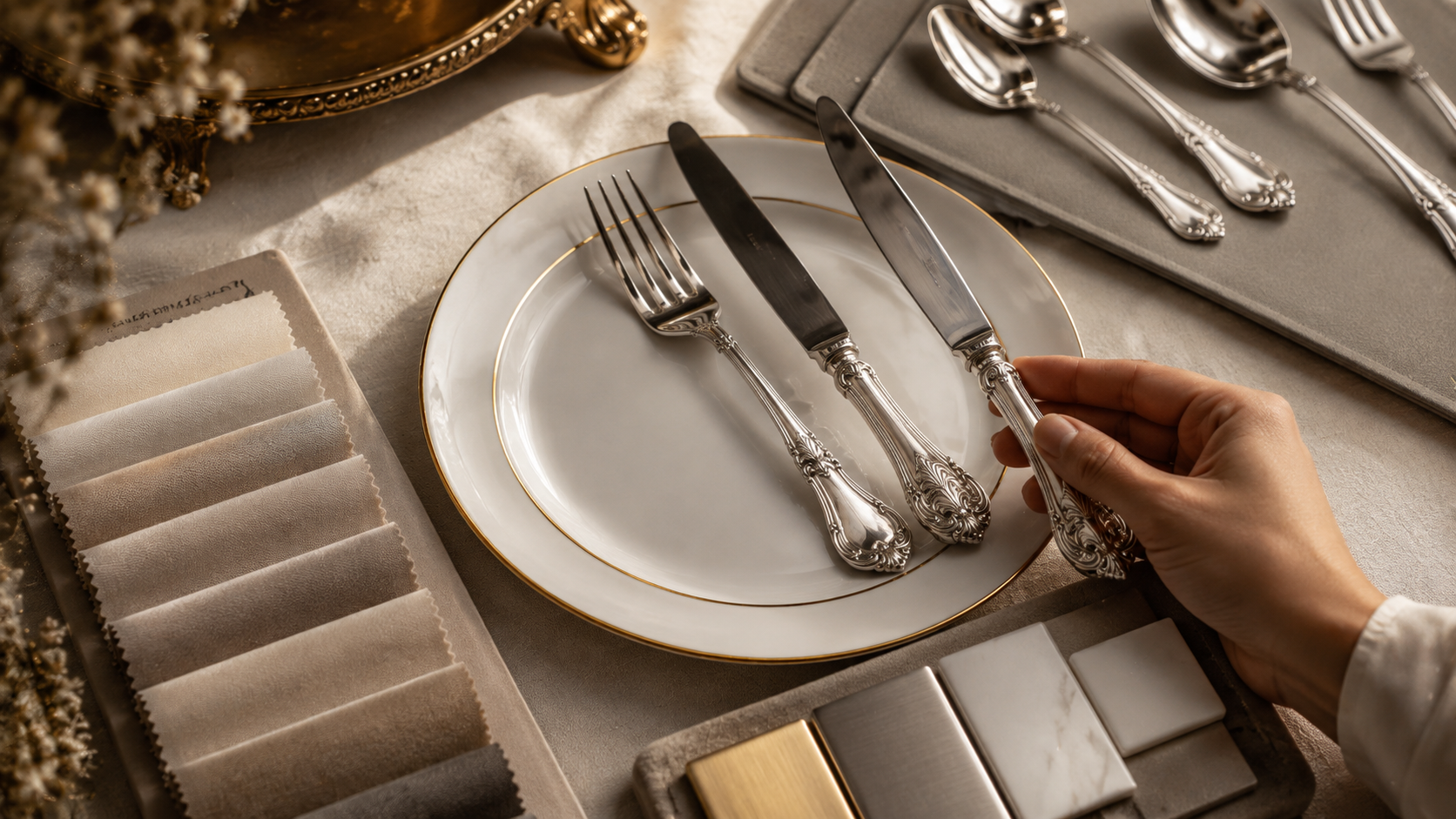
The correct reading depends on your objective. If you are looking for modern flatware for frequent use, prioritize a clear specification sheet with material, finish, care instructions, replacement availability, and manufacturer. If you are studying a vintage service, document all hallmarks and compare only equivalent pieces. If you want solid silver, look for a hallmarked standard and do not confuse a silver-plating mark with 800 or 925.
You can start with the Mesa Real cutlery category, review the selected manufacturers, or return to the Mesa Real Journal to continue with other material guides. When a hallmark is not conclusive, send clear photographs through the contact page; the responsible response may be that information is still missing.
Frequently asked questions about 20, 40, 90, and 100 hallmarks
Does a 90 hallmark mean the flatware is 90 % silver?
No. In the plating system described, 90 is a reference to the nominal amount applied to the coating. It is not a 900 fineness nor a percentage of silver throughout the entire piece.
Does each piece of flatware marked 90 contain 90 grams of silver?
No. The historical explanation relates the number to a reference batch of 24 main pieces, while the RAL formulation uses a surface area of 24 dm². Neither means 90 grams in a single spoon or fork.
Does a 100 hallmark identify solid silver?
No. Within a comparable scale, 100 indicates a higher nominal application than 90, but the piece remains silver-plated over a base metal unless other hallmarks and documents prove a different construction.
Is 90 silver plating better than 40?
In pieces from the same manufacturer, era, type, and system, 90 usually represents a higher nominal amount. However, the current condition, adhesion, finish, and wear can completely change the practical comparison.
What does 925 mean on flatware?
925 is a fineness mark: 925 parts of fine silver for every 1,000 parts by weight of the marked alloy. It must be interpreted alongside other hallmarks and the specific construction of the piece.
Why can a knife also be marked with 90?
Manufacturers applied equivalencies for pieces with different shapes and constructions. The stamp does not mean the knife contains the same mass of silver as a spoon; it expresses its membership in a silver-plating class defined by that system.
Can the value of a service be determined solely by the number?
No. The number must be combined with manufacturer, pattern, integrity, condition, provenance, repairs, and demand. Without that data, any price would be speculative.
What happens if only the number appears and no manufacturer's mark is visible?
The identification remains incomplete. It is advisable to review all pieces, look for small or worn marks, and compare the shape of the hallmark with specialized archives. An isolated number does not allow for a rigorous attribution of a manufacturer or a date.
How we verified this guide
The editorial team cross-referenced four types of sources: an encyclopedia specialized in historical marks, a technical reference based on RAL guidelines, the current international standard for silver-plated flatware, and an official regulation of hallmarks for 800 and 925 fineness. We avoided converting historical marks into universal thicknesses, estimating years of durability, assigning prices, or attributing manufacturers without evidence.
Fact Check Completed on August 3, 2026. Risk Review No promises of value, durability, or authenticity based solely on the hallmark. Proofreading Terminology, consistency, grammar, and US English variant reviewed. Recommended Update Annual review or when the cited technical standard changes.
Sources consulted
- 925-1000.com — Number Marks on Continental Silverplate. Historical context of the 24-piece system and its variants.
- Leuze Akademie — Besteckversilberung. RAL technical reference for 90-gram silver plating.
- ISO 8442-2:1997. Materials and performance requirements for stainless steel and silver-plated flatware; version confirmed in 2025.
- Irish Statute Book — Hallmarking (Approved Hallmarks) Regulations 2019. Official definition of 800 and 925 fineness in parts per thousand.
FROM THE BRAND TO THE PIECE
Choose by documented material, not by assumption
Explore flatware with clear specifications or request a preliminary review of your photographs. When documentation is insufficient, Mesa Real prefers to declare uncertainty rather than turning an incomplete hallmark into a commercial certainty.